


If you've spent any time around a landing, a saw shop, or a fireline in Western Canada or the Pacific Northwest, you've seen them. A row of wedges tucked into a faller's back pouch, each one topped with that unmistakable red head. For over sixty years, K&H "Red Head" wedges have been one of those quiet constants in the woods, the kind of tool that doesn't need a marketing campaign because the people who use them every day keep buying them.
We're proud to carry the full lineup of K&H Red Head felling wedges at Axeman.ca, and today we want to give this humble tool the attention it deserves. Because when you look at how these wedges are actually used, in production logging and in danger tree falling on wildfires across Canada and the United States, you start to understand why they've earned their reputation.
A Wedge Born in the Timber Industry, 1962
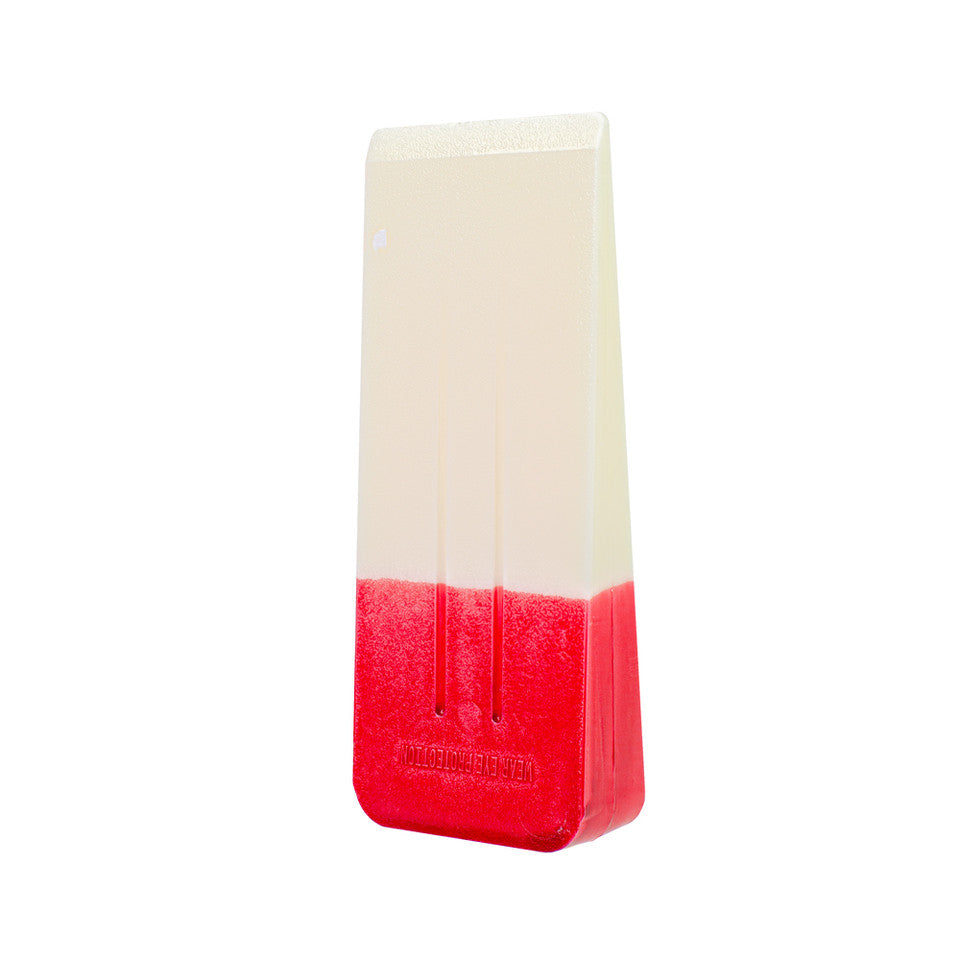
K&H Distributing got its start in 1962 in Oregon timber country, founded by people who came out of the industry themselves. The problem they set out to solve was simple. Fallers needed a wedge that was light enough to pack all day, tough enough to take a beating from the back of an axe, and non-sparking so it wouldn't chip a saw chain or throw sparks in dry timber the way steel wedges could.
Their answer was a high-impact ABS plastic wedge, formed through high-pressure injection molding with a polymer blend that resists shattering and mushrooming. The lightly textured surface was a deliberate choice too. It keeps the wedge from popping back out of the kerf during hard driving, which is exactly the moment you don't want your lift disappearing on you.
More than sixty years later, the design has barely needed to change. That red top became the easiest way to spot your wedge in the sawdust and duff, and eventually became the name everyone knows them by.
Why Professional Fallers Reach for the Red Head
Ask a production faller why they run K&H wedges and you'll usually hear some version of the same three things.
They drive easy and lift hard. Many loggers consider K&H the easiest plastic wedge to drive, and the taper geometry delivers serious lifting power for standing a tree up against its lean or tipping it over the stump. On a back-leaner, that lift is the difference between the tree going where you planned and a long, uncomfortable afternoon.
They stack without spitting. When one wedge isn't enough, fallers stack them. The textured finish on Red Heads lets them stack two and even three high without the whole pile squirting out of the backcut, which is a common complaint with smoother, cheaper wedges.
They last. Hard ABS plastic resists the mushrooming and chipping that slowly eats lesser wedges. A wedge that keeps its shape drives truer, holds better, and stays in your pouch for seasons instead of weeks.
And there's the safety piece that matters to every faller: if your chain ever kisses a plastic wedge, you touch up the chain and carry on. Hit a steel wedge and your day changes.
On the Fireline: Wedges and Wildfire Falling
Wildfire falling is some of the most demanding saw work there is. Snags and fire-weakened trees are a leading hazard to wildland firefighters, and both Canadian and American agencies bring in certified fallers specifically to assess and remove danger trees along firelines, roads, staging areas, and around structures. In BC, that work is governed by the BC Faller Training Standard and WorkSafeBC regulations. In the US, wildland fallers work under NWCG faller qualifications, from basic through advanced.
Wedges are central to that work. WorkSafeBC's forestry regulations require that wedging tools be immediately available and that wedges be set unless the tree has a pronounced favourable lean. On a fire, that requirement carries extra weight. Fire-damaged trees often have compromised holding wood, burned-out catfaces, and rot that limits how much solid wood a faller has to work with. A wedge that sets firmly, drives predictably, and holds its lift lets the faller commit the tree to its lay and get to the escape route with confidence.
The non-sparking nature of ABS plastic is not a small detail in this environment either. Driving steel on steel in tinder-dry fuels is exactly the kind of ignition risk nobody on a fireline wants to create. A plastic wedge and the poll of a good axe get the job done without that worry.
It's the same reason the Red Head sits comfortably alongside the other wildfire tools we supply, like the Council Tool Pulaskis and gear in our firefighter tools collection that head out to crews across BC and beyond every season.
In the Logging Industry: A Tool for Every Stand
From small woodlot thinning in Ontario to old-growth coastal timber on Vancouver Island, the K&H lineup covers the range. That's why the company makes five versions rather than one.
K&H Red Head Size Guide
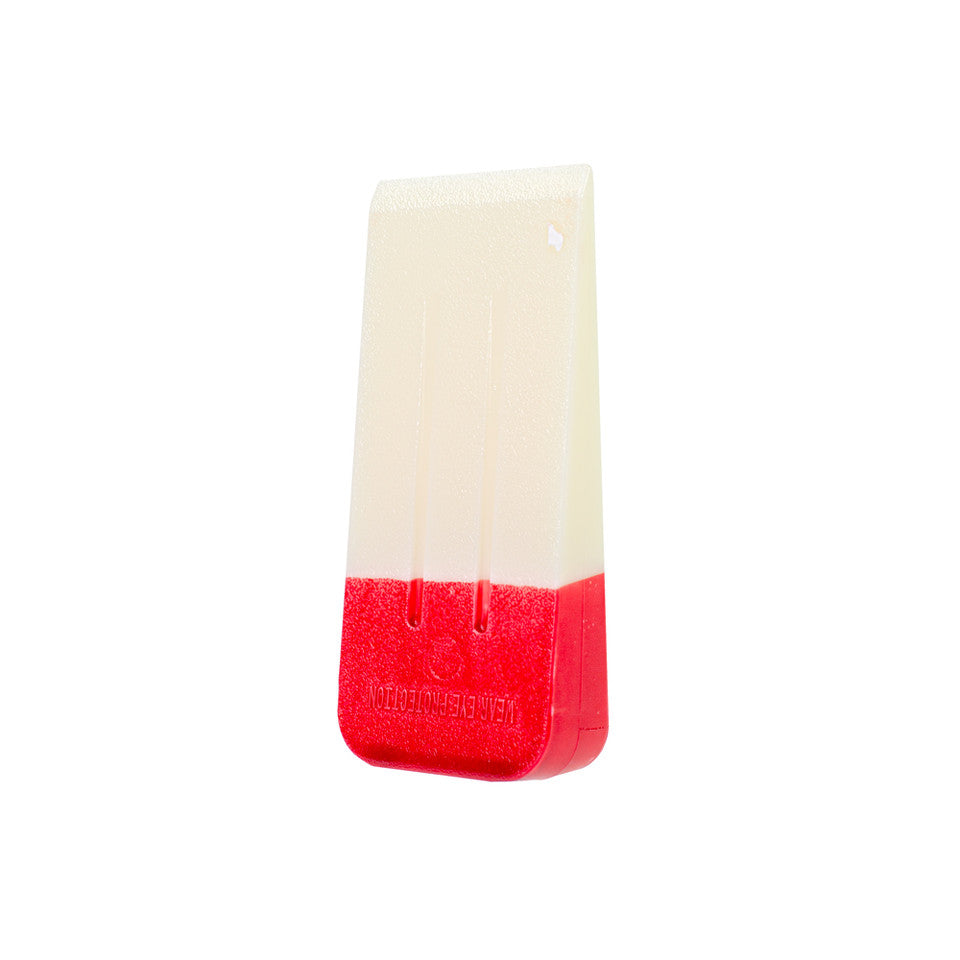
5 1/2" The little one. A favourite for small timber, bucking, construction, and auto body work. Arborists love this size for holding a kerf open on low stump cuts and keeping the bar from pinching when bucking.
7 1/2" The sweet spot for medium timber falling and firewood cutting. If you only carry one wedge on the back forty, this is a strong candidate.
10" The production faller's standard. This size has seen decades of hard use by timber fallers, heavy industry, and construction crews. Roughly 1 inch of lift.

10" Triple Taper (TT) The double-lift version of the 10", with a stepped triple taper that delivers about 1 3/8" of lift. When you're standing up a stubborn back-leaner, that extra lift per wedge means fewer wedges and less pounding, which also means less vibration through a compromised stem. That matters when you're working fire-weakened wood.
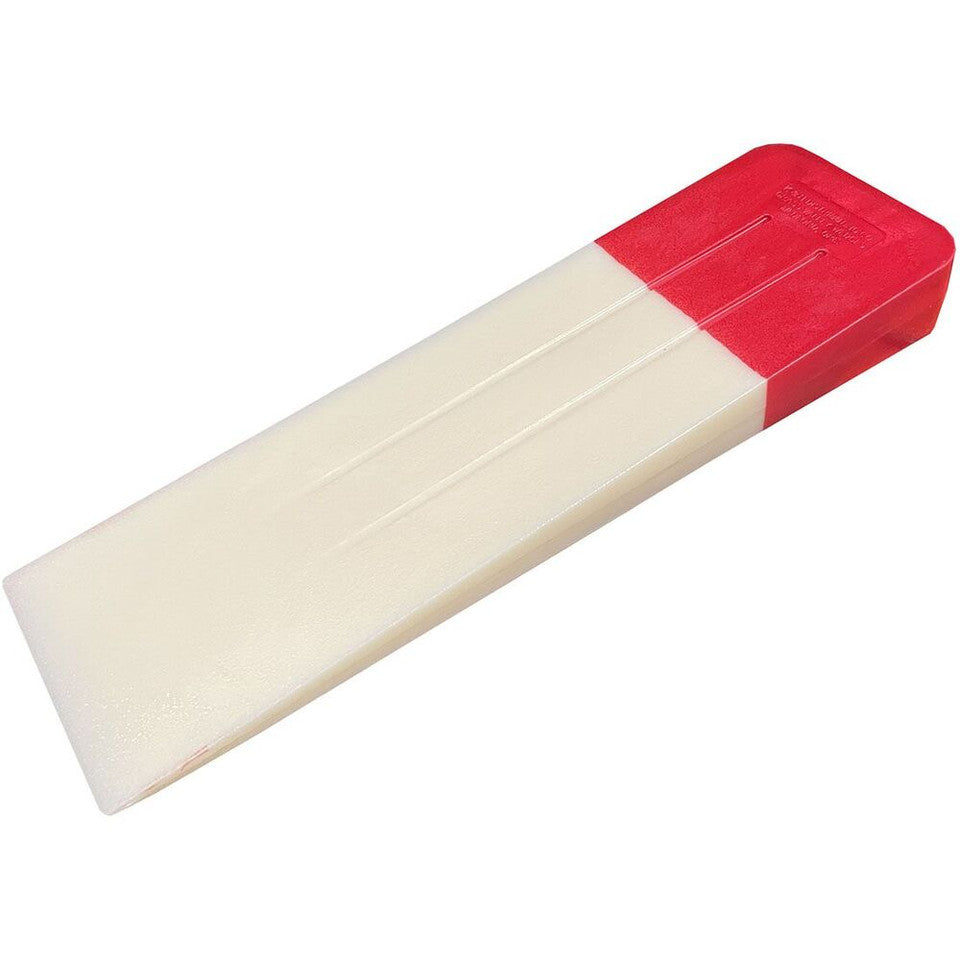
12" The big one. Favoured by timber fallers in large wood, and interestingly, by bridge companies who use it for erecting and inspecting bridges. When a tool crosses over from the cutblock to heavy civil work, that tells you something about its durability.
All five sizes are available on our K&H Red Head Wedges product page, starting at $13.99 CAD.
A Few Wedging Tips from the Stump
Carry more than you think you need. Two is one and one is none. Most working fallers carry three or four wedges in a wedge pouch, mixing sizes.
Set your wedge early. Get a wedge started in the backcut as soon as there's room for it, before the tree has a chance to sit back on your bar.
Drive with the poll, not the edge. The flat poll of a solid felling axe is the traditional driver. Pair your wedges with something from our felling axe collection and you're set.
Wear your safety glasses. Even durable plastic can shed small chips under hard driving. Eye protection is standard practice every time a wedge gets hit.
Retire tired wedges. When the head finally starts to deform after long service, replace it. At this price point there's no reason to fight a worn wedge.
Follow K&H and See These Wedges at Work
K&H Distributing is still a small American manufacturer, based in White City, Oregon, making the same wedge that built their name. They share great photos and videos of Red Heads in the field, from big timber falling to fire salvage work, on their social channels. It's well worth a follow to see these wedges doing what they were built for:
Frequently Asked Questions
Are K&H Red Head wedges good for beginners?
Yes. They're forgiving, easy to drive, and affordable, which makes them just as good a choice for a firewood cutter as for a coastal production faller. Start with the 7 1/2" for general use.
What's the difference between a felling wedge and a splitting wedge?
A felling wedge is blunt and wide-angled, designed to lift and steer a tree rather than cut into it. A splitting wedge has a sharper edge meant to split wood along the grain. Red Heads are felling wedges, though plenty of folks also use them to keep a kerf open when bucking firewood.
Why plastic instead of steel or aluminum?
Plastic won't wreck your chain if you nick it, won't spark in dry conditions, and weighs far less in your pouch over a long day. The hard ABS that K&H uses holds up to serious pounding without shattering.
How many wedges should I stack?
Stack as needed, but the textured finish on Red Heads is what makes stacking practical. Users report confidently triple-stacking these where smoother wedges would pop out.
Ready to add a few Red Heads to your kit? Shop the full range of K&H Red Head felling wedges here, and browse our firefighter tools and felling axes to round out your setup. Free Canadian shipping on orders over $95. As always, if you have questions about which size suits your work, drop us a line. We're happy to talk wedges.


Laisser un commentaire